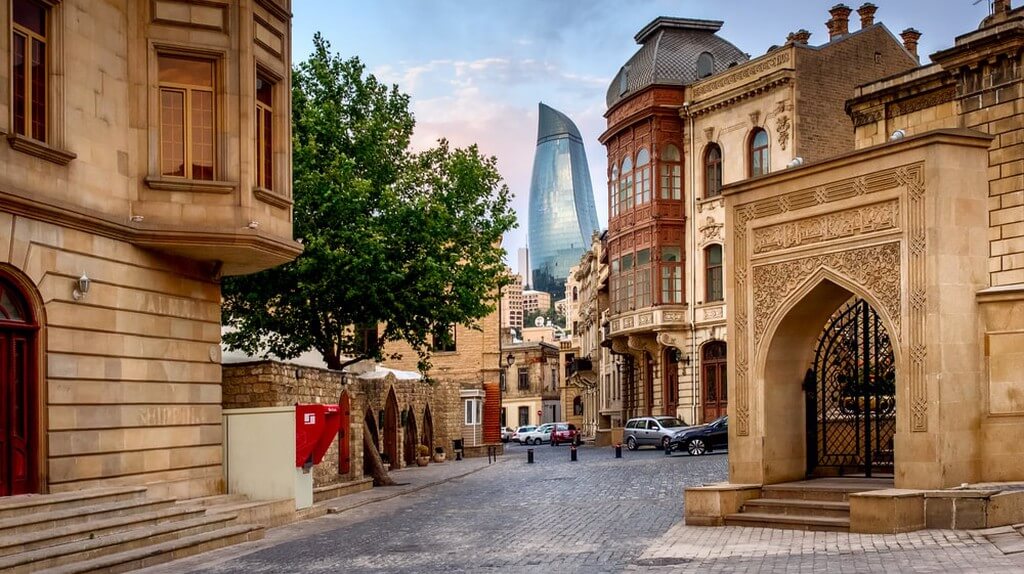
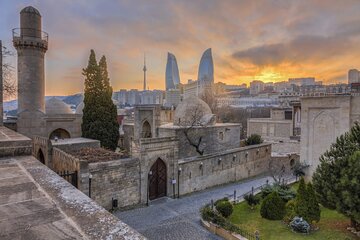
The Palace of the Shirvanshahs is a stunning 15th-century royal estate located at the highest point of Baku's historical fortress, Icherisheher. Described by UNESCO as "one of the pearls of Azerbaijan's architecture," this magnificent sandstone complex served as the grand headquarters of the Shirvanshah dynasty after they shifted their capital from Shamakhi to coastal Baku following a devastating earthquake. Дворец Ширваншахов — великолепная королевская резиденция XV века, расположенная на самой высокой точке бакинской крепости Ичери-шехер. Описанный ЮНЕСКО как «одна из жемчужин азербайджанской архитектуры», этот масштабный комплекс из тесаного известняка служил резиденцией правителей династии Ширваншахов после переноса столицы из Шемахи в Баку.
The Layout of the Medieval ComplexАрхитектурный ансамбль комплекса
The Palace of the Shirvanshahs is not just a single building, but an ensemble arranged over three terraced levels. The complex contains the main residential palace building, the stunning octagonal **Divankhana** (the state reception and court hall), the royal burial vaults, the Shah mosque with its original stone minaret, the mausoleum of the famous palace scientist Seyid Yahya Bakuvi, and the ruins of the ancient subterranean royal bathhouse (Hamam). Ансамбль Дворца Ширваншахов представляет собой ступенчатый комплекс, расположенный на трех уровнях. Он включает в себя двухэтажное жилое здание дворца, изящную восьмигранную **Диванхану** (государственный судебный зал), усыпальницу правителей, шахскую мечеть с каменным минаретом, мавзолей придворного ученого Сейида Яхья Бакуви и руины старинной подземной бани.
Masterpieces of the Shirvan-Absheron Stone CarvingШедевры Ширвано-Апшеронской резьбы по камню
What makes the palace globally famous is the exceptional artistry of its medieval masonry. The portal entries (portals) of the Divankhana and the family tomb display intricate geometric patterns, delicate flower carvings, and Arabic calligraphic scripts etched deeply into local Absheron limestone. Despite enduring multiple historical wars, bombardment, and brief occupations over the centuries, the complex stands beautifully intact. In 2000, alongside the nearby Maiden Tower, it was inscribed into the UNESCO World Heritage List. Мировую известность дворцу принесла тончайшая средневековая резьба по камню. Порталы Диванханы и фамильной усыпальницы украшены сложными геометрическими узорами, растительными орнаментами и арабской вязью, искусно высеченными на апшеронском известняке. Несмотря на многочисленные войны и потрясения прошлых веков, комплекс прекрасно сохранился и вместе с Девичьей башней охраняется ЮНЕСКО.
The Subterranean Royal Bathhouse (Hamam)Подземная шахская баня
Uncovered during archaeological excavations in the 1930s, the palace bathhouse features an extensive semi-underground layout. It consists of multiple rooms designed for changing, bathing, and relaxing. The structure was built deep underground to keep the interior warm during chilly winters and refreshingly cool during hot Baku summers. Water was supplied through specialized clay pipes directly from unique local wells (ovdans). Today, it offers tourists an incredible glimpse into the advanced engineering and daily hygienic traditions of medieval Azerbaijani royalty. Раскопанная археологами в 1930-х годах дворцовая баня имеет полуподземную конструкцию. Она состоит из множества залов для купания и отдыха. Такое расположение помогало сохранять тепло зимой и прохладу жарким бакинским летом. Вода подавалась по глиняным трубам из особых колодцев. Сегодня этот объект наглядно демонстрирует туристам высокий уровень инженерной мысли средневекового Азербайджана.